Feature wall ideas
A Stone Feature Wall That Belongs in the Room
Choose the wall, scale, lighting, and surrounding materials that make natural stone feel like part of the room rather than an added decoration.
Which wall should become the feature, and how do I keep it connected to the room?
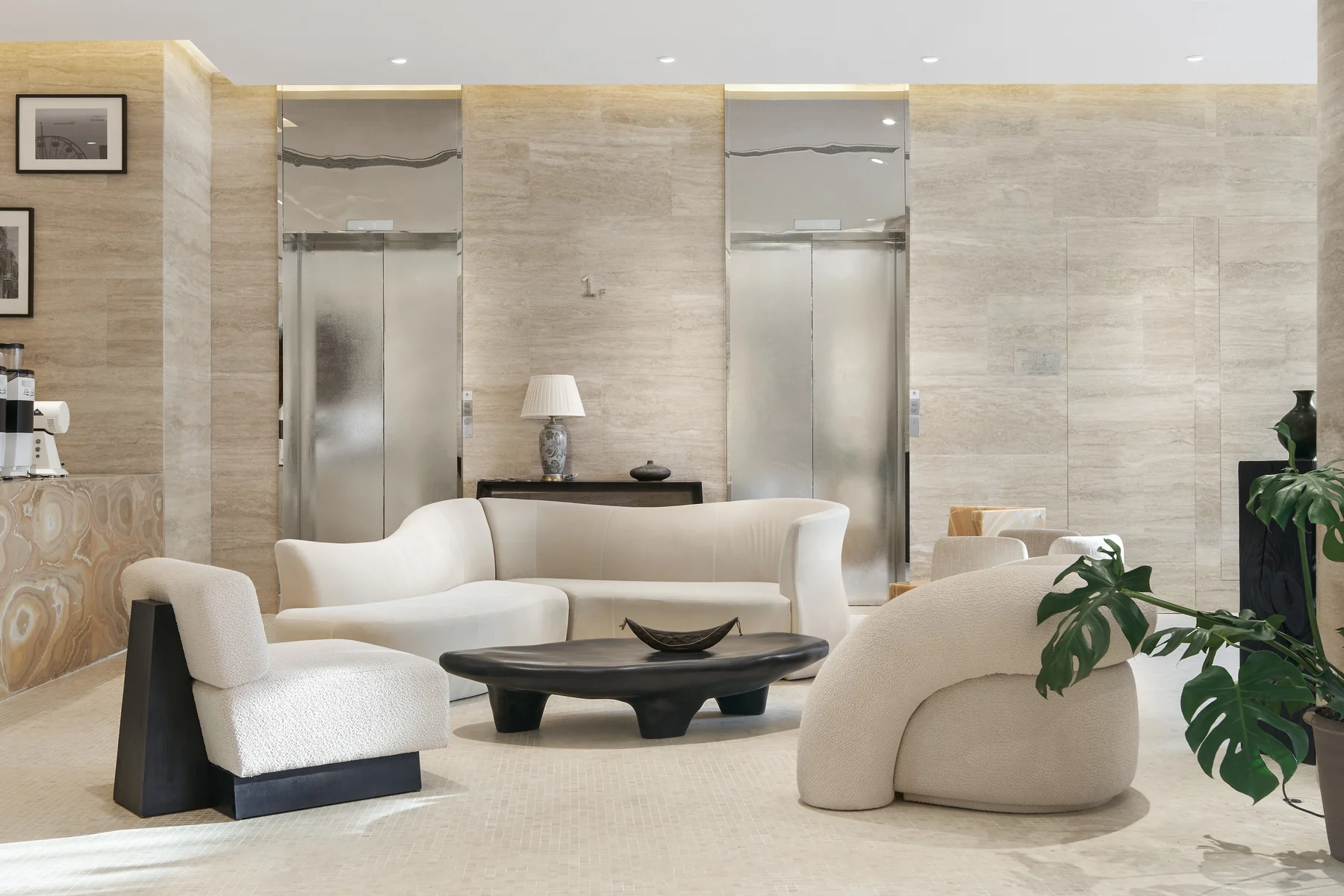
A feature wall works when it gives the room a clear center of attention. It should welcome your eye, support the way the space is used, and make everything around it feel more intentional. The goal is not to find the biggest empty wall. It is to find the wall that already matters.
Choose the moment
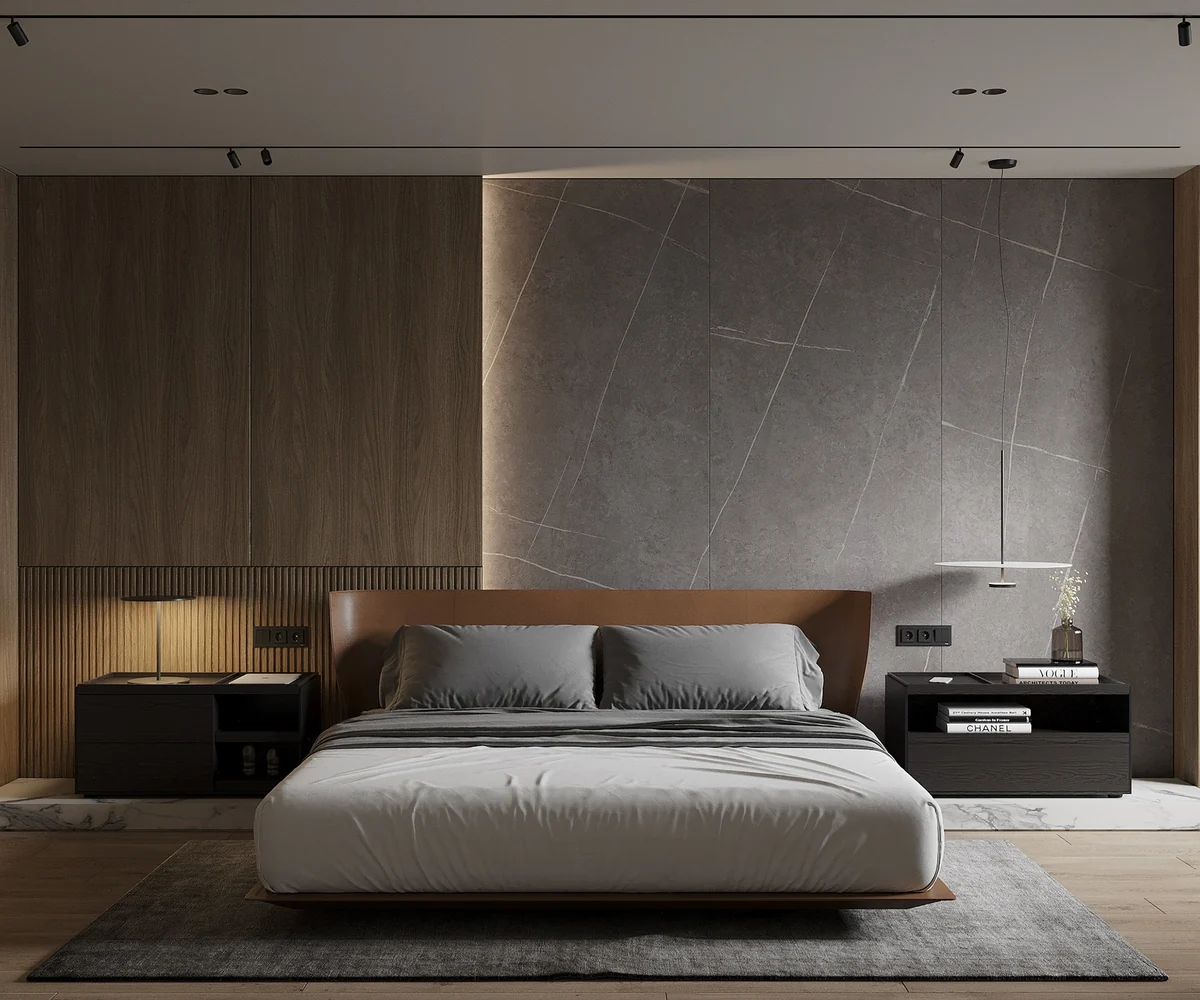
Look for a wall that frames something important: a bed, dining table, fireplace, reception desk, or favorite piece of furniture. Stone can strengthen that moment and make the room feel anchored.
Avoid choosing a wall only because it is empty. If doors, tall furniture, or daily movement keep interrupting the view, the stone may never get the space it needs.
Match the scale to the room
A full wall creates a calm, immersive backdrop when the pattern is quiet. A smaller framed section can give a compact room focus without taking over. Strongly patterned stone often needs more breathing room around it than a softer surface.
Mark the proposed area with removable tape and live with the outline for a day. View it from across the room and from the places where people sit.
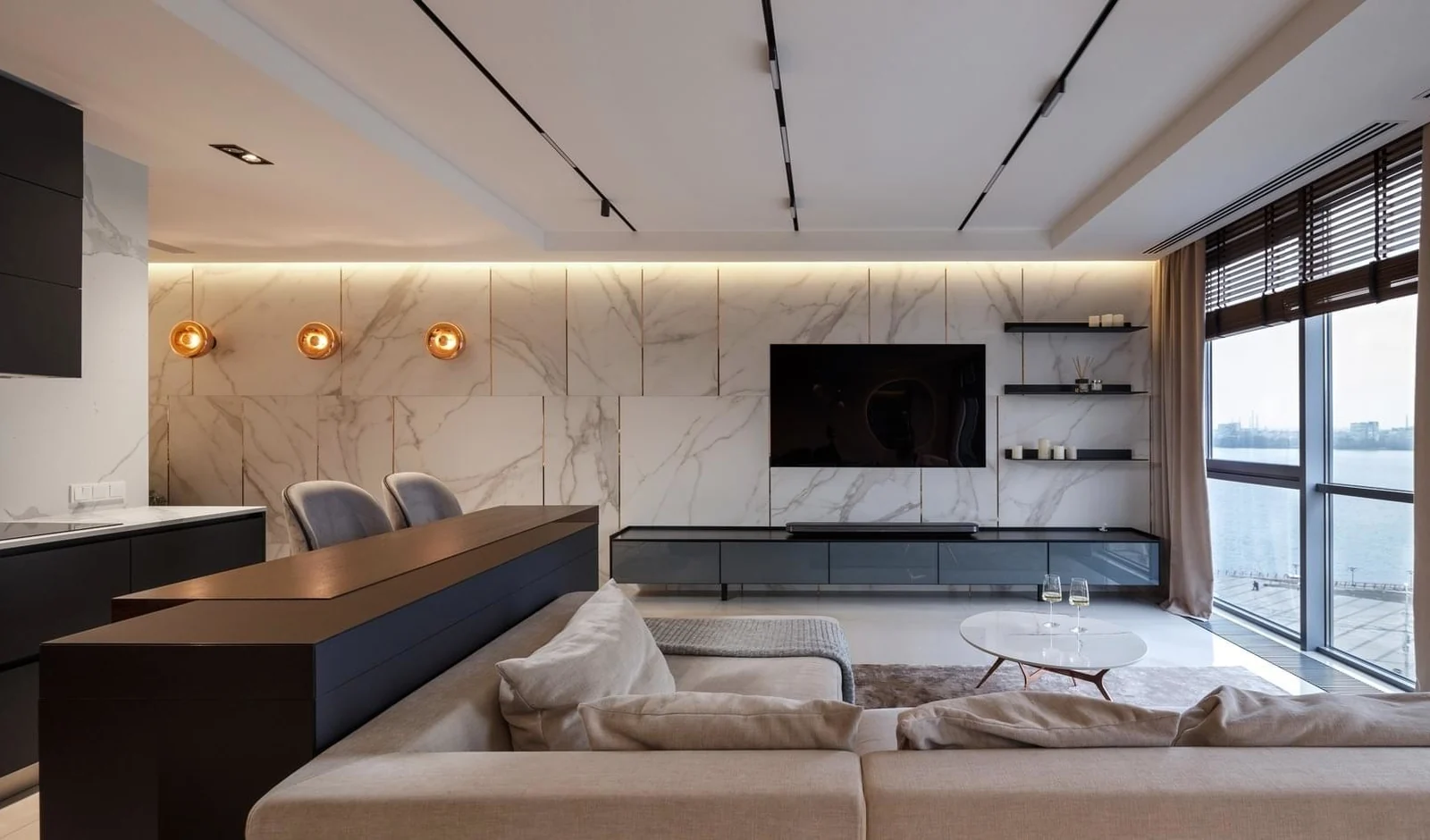
See the wall by day and by night
Daylight can reveal natural color and broad movement. Evening light can deepen shadows and make texture more noticeable. Before choosing, place a sample upright on the wall and look at it at the times you use the room most.
Soft, even light keeps the surface relaxed. Light placed closer to the wall makes texture feel stronger. Neither is automatically better; choose the atmosphere you want to live with.
Let the surroundings support the stone
Keep one clear lead
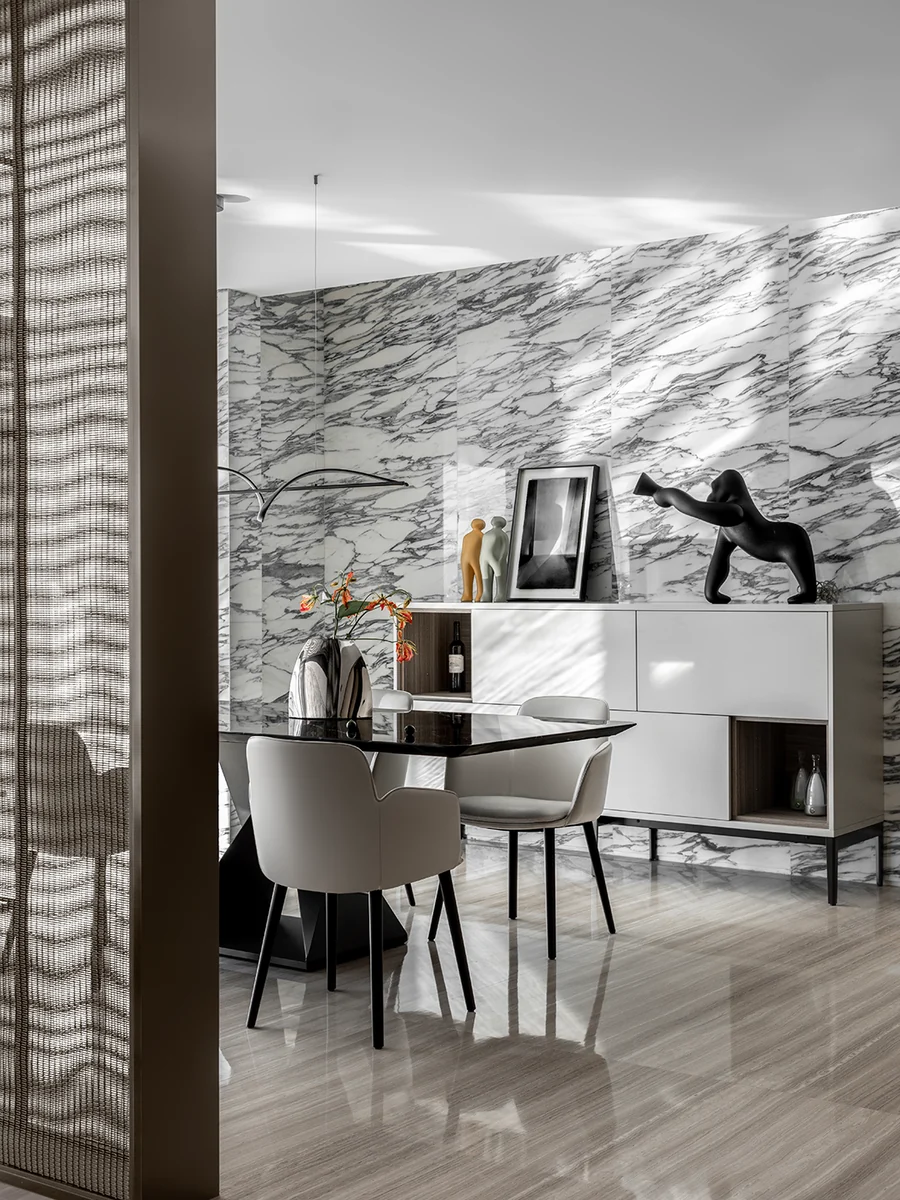
If the stone has bold movement, let nearby paint, curtains, and larger furniture stay quieter. If the stone is subtle, artwork and color can play a bigger role.
Repeat, do not compete
Pick up one tone from the stone in wood, metal, or fabric. A small connection is enough; the room does not need to match perfectly.
Frame the edges
Think about where the wall begins and ends. A doorway, cabinet, wood strip, or shadow line can give the composition a natural stopping point.
The best final check is simple: imagine the room with the furniture, artwork, lighting, and daily clutter back in place. If the wall still has a clear purpose and the rest of the room still has space to breathe, you have probably found the right balance.