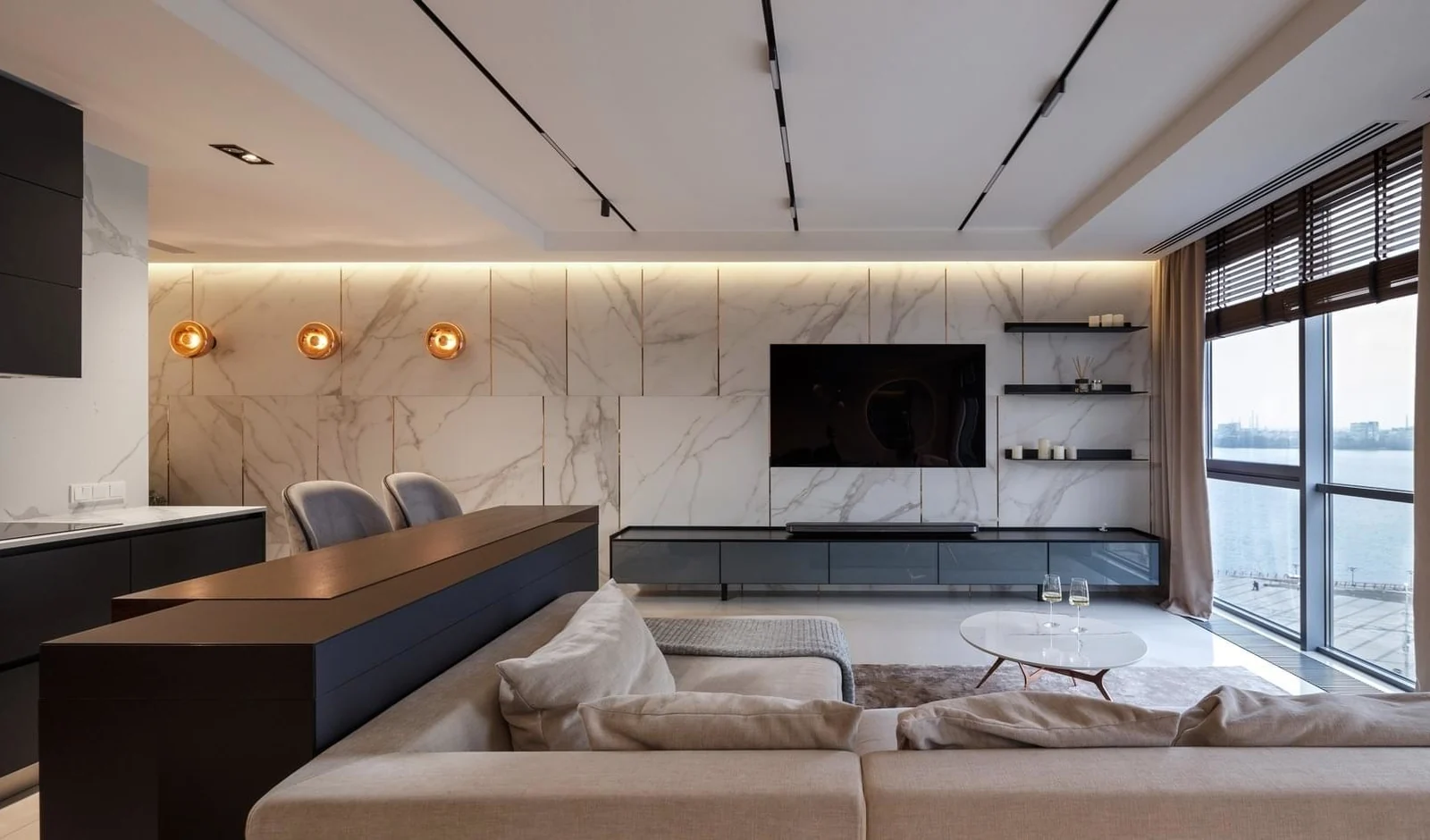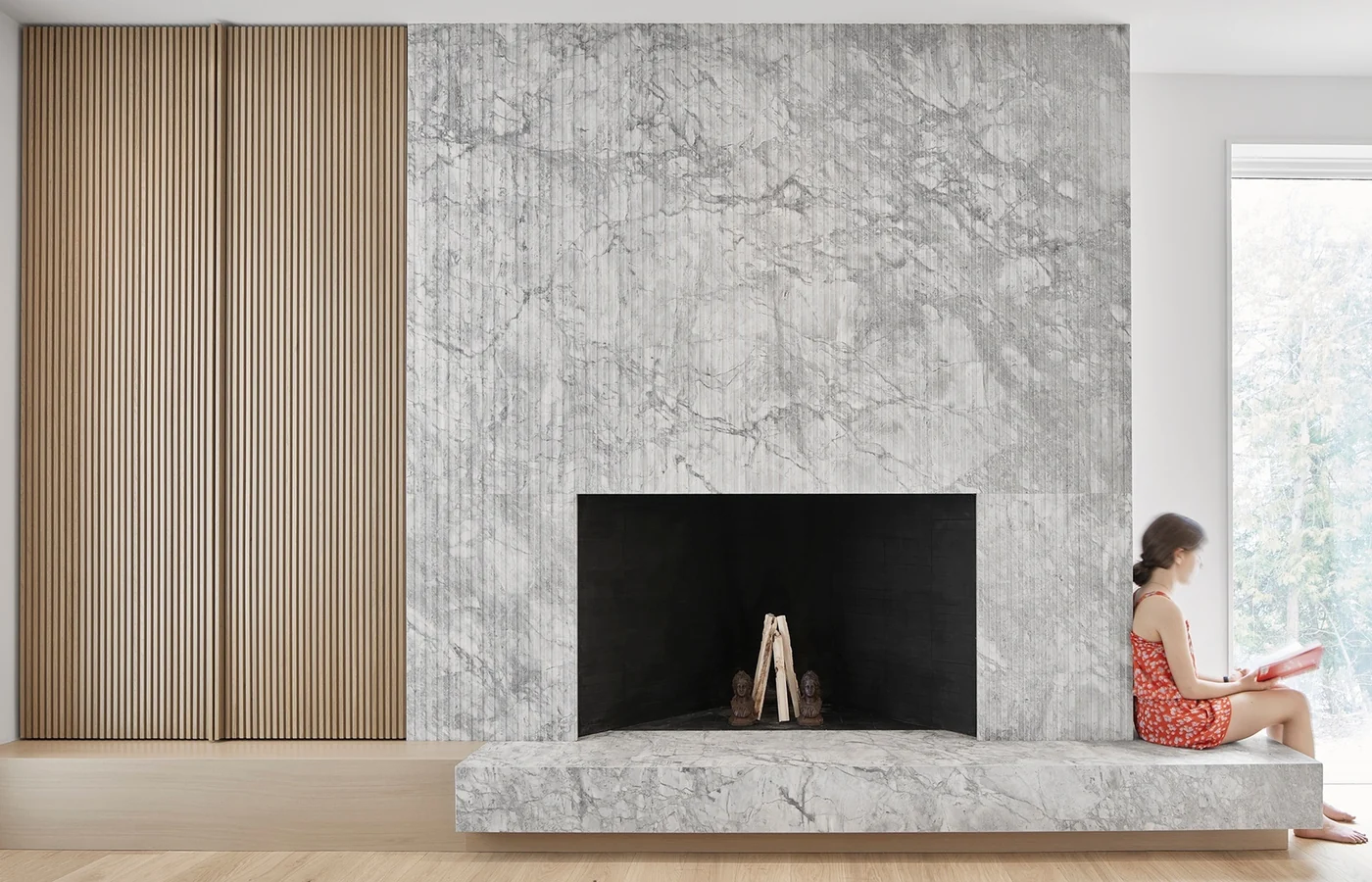
Small transformations
One Small Stone Detail, One Completely Different Room
See how furniture fronts, niches, shelf backs, columns, and welcome desks can carry a memorable stone detail without a full-room renovation.
Can a small area of stone make enough of a difference?
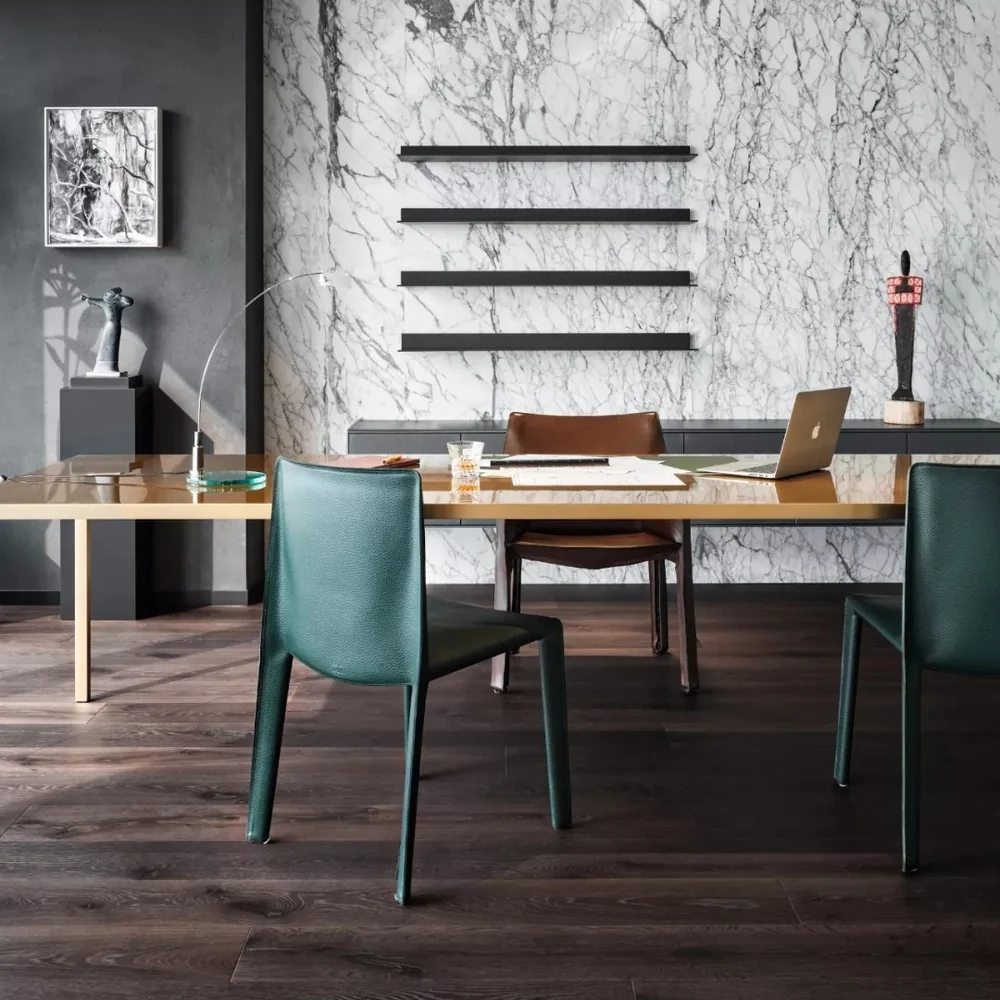
A room does not need a full stone wall to feel special. A smaller, carefully chosen detail can draw the eye, give an everyday object more character and make the whole space feel considered.
Start with one moment
Let the detail earn its place
Think about where people naturally look, pause or reach. It might be the cabinet opposite the doorway, the niche beside a bath or the desk that welcomes every visitor. These are good places for a memorable surface because they already have a purpose. Stone adds depth and movement without asking the rest of the room to compete.
Choose one or two connected details rather than adding stone everywhere. Repeating the same character on a sideboard and a nearby shelf back, for example, can make the room feel joined up while leaving plenty of visual calm.
Furniture fronts
Bring texture to cabinet doors, a media unit, or a bedside piece. Keep handles and surrounding colors simple so the natural pattern remains the focus.
Niches
A stone-lined niche turns a useful recess into a framed display. Gentle lighting can reveal the surface while keeping the mood relaxed.
Sideboards
Cover the front, top or both, depending on how quiet or expressive you want the piece to feel. A timber edge can give the design a softer finish.
Columns
Instead of trying to hide a column, make it part of the room’s rhythm. A continuous stone pattern helps it feel intentional from every direction.
Reception desks
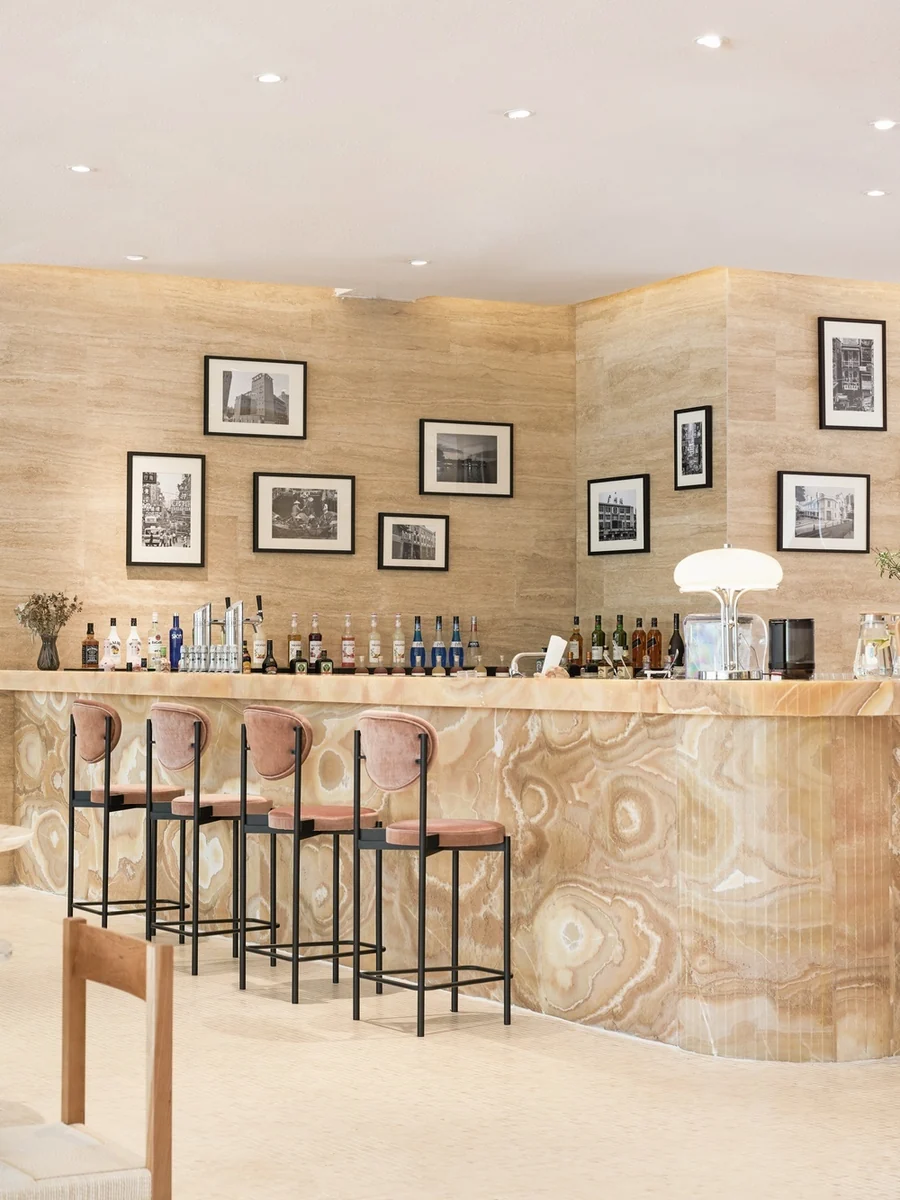
The welcome desk is often the first close-up experience of a space. A distinctive front can express warmth, calm or drama before a word is spoken.
Shelf backs
Stone behind open shelving adds a layer of pattern without taking over. Allow some empty space so objects and surface can be appreciated together.
Balance pattern with breathing room
The more movement your chosen stone has, the simpler its neighbors can be. Plain paint, quiet wood, and clean metal lines give a lively surface room to shine. With a gentler stone, you can introduce richer color or more decorative objects around it.
Edges matter because small details are seen up close. Before deciding, picture where the stone begins and ends, which corners will be visible, and whether the pattern should run in a particular direction. A quick sketch can make that conversation much easier.